How would you like to be the president of your company/organization? It is easier than you think!
Most of us in business desire success, almost as much as we need air.
From the moment we are born, we are looking to Do More, Get More and Be More.
The good news is that you are already president of YOU INCORPORATED - which means you are totally responsible for YOU and your SUCCESS.
You are in charge of and master of virtually all you do. In short, you are a lot more than meets the eye.
So, what are you already in charge of, Mr./Madam President?
You are responsible for sales - your income.
You are responsible for the books you read.
You are responsible for your moods and attitudes.
You are responsible for the time you get up.
You are responsible for your willingness to work hard.
You are responsible for your discipline.
You are responsible for who you hang around with.
You are responsible for your enthusiasm.
You are responsible for product knowledge.
You are responsible for your fitness.
You are responsible for your ethics. (Never lie, cheat or steal - ever!)
You are responsible for how you dress.
You are responsible for your language.
You are responsible for the questions you ask.
I'm sure you get the picture...
As president of You Incorporated, you are fully responsible for all you do - EVERYTHING! PERIOD!
The motto of Amazon.com: "Work hard, play hard, change the world."
Woody Allen once said, "Ninety percent of success is showing up."
So, for tomorrow, show up as president of you and conduct yourself that way. It won't be easy.
Try it for 120 days. Smile a lot, transform your life, be positive, be interesting, return phone calls, set big goals, dream big dreams, hang with other presidents and learn.
Philosopher William James once said, "Belief creates verification in fact."
"Your belief in yourself and your company and your place in the world may be the main determination of your success." – Tom Butler-Bowdon
So, go get 'em, Mr./Madam President.
Your future awaits.
Read more; http://us7.campaign-archive2.com/?u=dd06a025cdd9b3464c1c2e433&id=b875b61bef

Showing posts with label Celebrities. Show all posts
Showing posts with label Celebrities. Show all posts
Saturday, 28 March 2015

Thursday, 26 March 2015
25 Leadership Quotes And Lessons From McFarland, USA
McFarland, USA is absolutely incredible and a movie everyone should see. This movie chronicles the story of coach Jim White’s, played by Kevin Costner, relocation of his family to the Mexican-American farming community of McFarland, CA where he became the town’s high school cross country coach.
If you are looking for a family-friendly, inspirational movie about perseverance, family and the power of community, look no farther than McFarland, USA. You will not be disappointed.
The following are 25 Leadership Quotes And Lessons From the absolutely wonderful McFarland, USA:
- The Only Difference Between Anger And Danger Is A “D” – Leaders often lose influence when they lose control of their emotions. Coach White’s only option for employment was a school in one of the poorest cities in America after his anger resulted in a teenager getting injured.
- Leaders Want Options – After Coach White’s family arrived in their new McFarland home, he said despondently, “We’ve got to make it work. We don’t have another choice.”
- The Power Of Persistence – One of the runners said to Coach White, “It’s not the size of the dog in the fight. It’s the size of the fight in the dog.” To which Coach White responded, “Depends on the size of the dog.”
- Leaders Build The Self-Esteem Of Those They Serve – After being removed from an assistant football coach job after just one game, one of the runners told Coach White, “They’re treating you like a picker.”
- There Is A Fine Line Between Success And Failure – There was a striking parallel in that a federal prison (failure) was right next to the high school (opportunity).
- Churches Should Prioritize Ministry To The Next Generation – One of the schools teachers told Coach White, “These kids, this is the best years of their life. If we’re going to reach them, now is the time.”
- Out Of Great Calamity Comes Great Opportunity – Coach White made an interesting observation. What better place could you find a cross country team than with kids who eat the right foods, pick in extreme heat and running is their primary mode of transportation?
- Great Leaders Recruit Influencers First – After identifying which students would make the best members of the cross country team, Coach White recruited one of the Diaz brothers because he would bring his two other brothers with him.
- Great Leaders Give People A Picture Of A Brighter Tomorrow – Coach White gave the team a picture of how running could benefit them and their families.
- The Chain Is Only As Strong As Its Weakest Link – The Diaz brother enlisted to recruit his brothers was the slowest runner on their team. However, by the movie’s end, his contributions were critical to the team’s success.
- Losing Is Never Easy For Great Leaders – Coach White told the team after losing their initial race, “What is hard is watching someone pass you on a hill…What is hard is losing.”
- Great Leaders Trust Their Preparation – They lost their first race because of how they ran the hills. But after training differently, Coach White confidently acknowledged, “When we see a hill we’re going to smile.”
- Going To A Higher Level Requires A Different Set Of Skills – To help the team cope better with racing through the mountains, Coach White demanded they “change gears going up a hill.”
- Leaders Get Better With Focus – Sometimes a lack of options is good for leaders. It eliminates distractions. Coach White told Thomas Valles, “Running is all you got.”
- Great Leaders Connect With Those They Are Called To Serve – Coach White took a day to pick cabbage with three of the Diaz brothers and their families. This brought him credibility with the Diaz family.
- Great Leaders Provide Solutions – After working a day in the fields, the exhausted Coach White worked out a schedule which allowed the Diaz family to continue making income while also racing.
- Even Great Leaders Make Mistakes – Coach White forgot his daughter’s birthday.
- Great Leaders Do Not Focus On Negatives – To relieve some of the team’s pressure, Coach White said, “Quit staring at the mountain. It’s not going anywhere.”
- Great Leaders Give Their People An Identity – One of the runners wrote, “When we run we own the earth…We’re not immigrants anymore.”
- Great Leaders Have High Pain Tolerance – When comparing his team to others, Coach White reminded them of what they face everyday and said, “It comes down to which runner can handle the pain.”
- Great Leaders Give Their People New Experiences – After making the state finals, Coach White took his team to experience something they never had before – the beach.
- Great Leaders Are Protected By Their Teams – When Coach White’s daughter was involved in a random act of violence, the entire cross country team provided protection by jumping in front of her.
- Great Leaders Prioritize Relationships – When considering leaving McFarland after the incident, Coach White’s wife Cheryl weighed the value of the friendships they had made. She said, “Jim, the owner of the store has a name and he’s our friend.”
- Leaders Make Their Teams Feel They Can Accomplish Anything – Before the final race, Coach White said to the team, “You run like you’re superhuman. There’s nothing you can’t do with that kind of strength.”
- Leaders Validate Their Teams – He concluded by saying, “You’ve got the biggest hearts I’ve ever seen.”
READ MORE; http://ht.ly/JsXgA
Thursday, 19 March 2015
Monday, 16 March 2015
Washington's Lessons: It’s Never too Early to Choose to Lead

George Washington filled many roles in his lifetime: a surveyor, frontier explorer, businessman, land speculator, soldier, farmer and statesman. A couple of examples from Washington’s childhood help to explain his successes later in life.
By age sixteen, Washington had copied out by hand, 110 Rules of Civility & Decent Behavior in Company and Conversation. They are based on a set of rules composed by French Jesuits in 1595. The first rule sets the tone of the others that follow: “Every Action done in Company, ought to be with Some Sign of Respect, to those that are Present.” There isn’t a leader that wouldn’t benefit from a daily reminder of this approach. Time and time again, these rules from his childhood played out in the conduct of his public life and defined his reputation. These rules and his concern for them integrated him as a leader and bonded him with those he led.

It is the mindset of a leader to work on themselves harder than they work on others. A leader’s first responsibility is governing themselves. Historian Gordon Wood has written, “Washington became a great man and was acclaimed as a classical hero because of the way he conducted himself during times of temptation. It was his moral character that set him off from other men.”
Leadership is embodied in the way you look at the world and respond to it. It’s never too early to choose to lead.
Read more; http://ht.ly/Ja7jX
Wednesday, 11 March 2015
Enough Leadership. Time for Communityship.
Heard the word “leadership” lately, for example in the last five minutes? We are obsessed with leadership: say organization and we think leadership. That’s why those organization charts are so ubiquitous. They tell us who sits on top of whom, but not, for example, who talks with whom? Must we be so fixated on formal authority? (Have a look at Figure 1 to see an Organization. Then look at Figure 2 to see a Re-organization.)


Ever heard the word “communityship”? If not, fear not: you won’t find it in a dictionary.1 Too bad, because we need it to put leadership in its place.
Say “leadership” and you invoke the image of an individual—at the limit, the great white knight riding in on a great white horse to save us all (even if headed into a black hole). Everyone else is a follower. Even if the intention of the leadership is to empower other people, its effect can be to disempower them. Do we really want a world of followers?
Think of the organizations you most admire. I’ll bet that front and center is a powerful sense of community. To use a phrase that I cannot repeat too often, effective organizations are communities of human beings, not collections of human resources.
How can you recognize communityship? That’s easy. You have found it when you walk into an organization and are struck by the energy in the place, the personal commitment of the people and their collective engagement in what they are doing. These people don’t have to be formally empowered because they are naturally engaged. The organization respects them so they respect it. They don’t live in mortal fear of being fired en mass because some “leader” hasn’t made his or her numbers. Imagine an economy made up of such organizations.
Sure we need leadership, especially to establish communityship in a new organization and to help sustain it in an established organization. What we don’t need is this obsession with leadership—of the individual singled out from the rest, as if he or she is the end all and be all of the organization. So here’s to less leadership, or perhaps better put, just enough leadership, embedded in communityship.
There is a famous line in a Molière play spoken by a character who discovers that he has been speaking prose all his life. Well, it’s time for us to discover that the best of our organizations have been living communityship all their lives.
Read more; http://www.mintzberg.org/blog/communityship
Tuesday, 10 March 2015
Is Your Leadership Style Right for the Digital Age?
Advancement in digital technologies has disrupted everything, including leadership styles, according to Barry Libert, Jerry Wind and Megan Beck Fenley. Employees want more ownership rather than to follow instruction; customers want to participate in the marketing and development process; and leaders are finding that open and agile organizations are able to maneuver more effectively than organizations where “all insight and direction comes from the top. In short, the autocratic Commander, whether brilliant or misguided, just won’t cut it anymore,” they write in this opinion piece.
History is full of great Commanders. The stories of General Patton commanding his troops before D-Day, Steve Ballmer yelling at his employees to “get on their feet” at a Microsoft event, and Jack Welch berating his people as he barked his orders “straight from his gut” are all well documented. These leaders accomplished great things and relied heavily on a “Command and Control” style of leadership. However, leadership preferences are evolving in parallel with a number of market and cultural shifts. Their successors, General Colin Powell, Jeff Immelt (GE) and Satya Nadella (Microsoft), as well as a host of other executives like Tony Hseigh of Zappos or Marc Benioff of salesforce.com, more often take on the role of Collaborator or Co-Creator, rather than Commander. And for good reason: These less autocratic leadership styles resonate with today’s empowered, connected and skeptical customers and employees — often leading to increased innovation, loyalty, profit and growth.
So what has changed in the last 20-30 years to require new ways of leading? Technological advancement has created a ripple effect that is transforming the market. Today’s digital technologies — social, cloud, big data analytics, mobile and the Internet of everything — have created new, intangible, sources of value, such as relationships and information that are delivered by new business models. Along with the new sources of value, customers and employees’ wants and needs have evolved as digital technologies have created new ways of interacting with businesses. Attracting, satisfying and retaining these connected and savvy stakeholders requires leaders to learn some new tricks — but there are rewards. Businesses and leaders that adapt to this new environment see economic payout with higher profit, growth and valuations, and more (see our earlier article in Knowledge@Wharton, Why Businesses Should Serve Consumers’ ‘Higher Needs’)
New Leadership Styles
So what is a leader to do given this new digitally enabled and hyper-connected environment? Employees and freelancers (such as Apple’s developer community) want ownership, impact and recognition, rather than to follow instruction. Customers want to participate in the marketing and development process (witness how consumer/business relationships have grown on social media and the rise of crowdsourcing businesses like Victors and Spoils), rather than be told what they want and why. Leaders are finding that open and agile organizations are able to respond faster and more effectively to these developments than organizations where all insight and direction comes from the top. In short, the autocratic Commander, whether brilliant or misguided, just won’t cut it anymore. Leaders need a broader range of style options to match the broader range of assets companies are creating today.
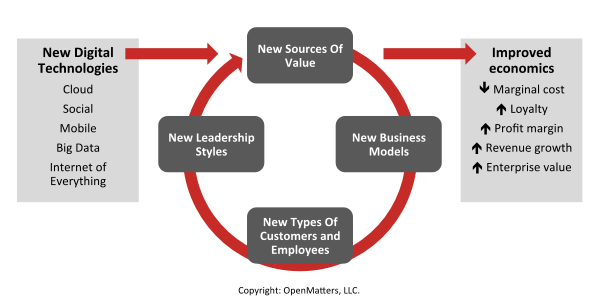
Figure 1: Disruption caused by new technology
In our business model research, based on financial data from the S&P 500 companies, we found that Network Orchestrators — companies that invest in intangible assets, like relationships with customers and suppliers (Facebook, LinkedIn, Airbnb, TripAdvisor) have the highest Multipliers (price to revenue ratios) at an average of 8x (more details here). These value premiums result from rapid growth and low scaling cost, as noted by Jeremy Rifkin in The Zero Marginal Cost Society. Further, we identified that the different leadership styles complement some business models and detract from others because each business model leverages different types of assets, which perform best under different leadership styles.
Since most companies are actually a composite of different asset classes and business types — for example, Nike manufactures shoes (physical), but also develops some software (intellectual) and is developing a network with Nike+ (network) — most leaders use several of the four leadership styles:
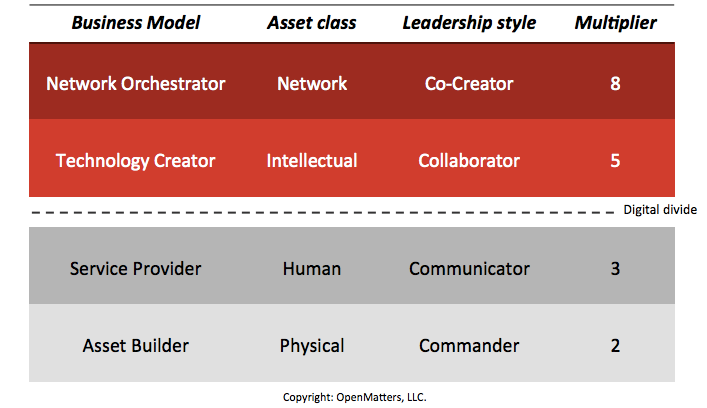
Figure 2: Relationship Between Business Model, Leadership Style and Value
The Commander sets the goal and tells others how to accomplish it. This works well with machinery, which happily does what it is told, and with direct subordinates who prefer to simply execute. It is less effective with employees and customers who want choice and participation. The result in today’s world is high marginal costs and little participation and buy-in. This style is most suited to the production of manufactured, commoditized goods as it is limited by the Commander’s vision and bandwidth.
The Communicator also sets a vision and a plan, but communicates it in order to inspire and create buy-in. This works better with employees and customers who want to at least understand where “the firm is headed.” It enables them to take action in line with the leader’s vision (it scales effectively), but it does not encourage innovation. This style is suited to services firms where all employees must work to fulfill the mission.
“Leaders need a broader range of style options to match the broader range of assets companies are creating today.”
The Collaborator works hand-in-hand with customers and employees (be they full time, part time or independent) to achieve the organization’s goals. As a result, it is empowering and enabling. This style taps into the innovation of people and drives the creation of new intellectual capital. Great examples are open innovators such as Victors and Spoils, a collaborative ad agency and Merck with its crowd-sourcing competitions.
The Co-Creator allows other stakeholders to pursue their individual goals in parallel with the goals of the organization. As a result, he or she drives both rapid scaling (due to the high level of participation) and innovation. This style is at the heart of network companies where value is shared by the company and the network participants, such as Airbnb, Uber and Innocentive.com.
Monday, 9 March 2015
The Innovative Organisation: Learning From Design Firms
The world’s top design firms have innovation down to almost a science. For traditional incumbents looking to build innovative capabilities, design can be the ideal catalyst.
In 1993, Samsung Electronics chairman Lee Kun Hee made a humbling discovery in a Los Angeles electronics shop. He found his company’s televisions relegated to a low, forgotten shelf in the back, while Sony and Panasonic models occupied the front window. To Lee, this spoke very badly for Samsung’s global standing. Soon afterwards, he began a radical overhaul of the company’s highly Confucian culture, with the goal of making Samsung one of the world’s leading brands.
Lee ordered top management to refocus their efforts from cost-saving to creating unique, must-have products. In 1994, Samsung initiated collaboration with a few design firms including IDEO. The following year, Samsung established an in-house design school (in partnership with the Art Center College of Design, the leading design school based in Pasadena, California) whose curriculum included art and culture tours of New York, Paris, Delhi, and many other creative hotspots. Perhaps most notably, Samsung was one of the few major companies in consumer electronics to create a position for a chief design officer. As times and technologies have changed, Samsung has gone from strength to strength: In the first quarter of 2014, the company shipped 85 million smartphones worldwide, more than its four leading rivals combined.
Design: Catalyst of Change
Design was pivotal to Samsung’s turnaround, in more ways than were readily apparent to consumers. As its products acquired sleekness and elegance, Samsung was retooling its organisational culture behind the scenes in line with Chairman Lee’s edict: "An enterprise's most vital assets lie in its design and other creative capabilities.” In short, the company was teaching itself to be innovative, before that buzzword achieved techie ubiquity.
The story at Apple, Samsung’s greatest competitor nowadays, shares certain similarities with Samsung’s. In the late 80s, prior to establishing its industrial group led by Bob Brunner (the design mastermind behind Beats headphones), Apple used to have only a few designers who would do most of their design work through design firms such as IDEO. Brunner eventually hired Jony Ive, with whom Steve Jobs led the design revolution initiated with the first iMac.
Samsung and Apple traced out a path to 21st-century success admired and followed by other brands. But too many companies still stash their design in a silo, where it can have little to no overall organisational influence.
A silo approach fails to capitalise on everything designers bring to the table in addition to creativity. Top design firms such as IDEO, Continuum, and Eight, Inc. have not only a well-tooled process for converting innovation opportunities into real innovations, but also a set of organisational elements perfectly aligned with that process. If companies require an innovation role model, they need look no further than design firms.
The Three “I”s in Design Firms
Designers’ most valuable capabilities have nothing to do with Photoshop, or any tool or technique for “designing”. They are much more about setting a direction than executing directives, more about shaping creativity to practical needs than indulging flights of fancy. By observing how many design firms work, I have identified three core organisational capabilities at which they particularly excel, which also comprise the rudiments of any innovation journey: user-centric insighting, deep and diverse ideating, and rapid and cheap iterating.
User-centric insighting: In order to create value in novel ways (the goal of innovating), you must first locate opportunities to do so. Where to start looking is easy to see—with the end-user—but it’s far more difficult to detect and synthesise actionable information within the complexity of the user experience. Customer surveys and focus groups simplify the process, but are often removed from how people authentically respond in the marketplace. Designers, by contrast, prefer observation to interrogation, developing empathy to discern unarticulated, even unconscious, user needs. As Tim Kobe, CEO of design firm Eight, Inc. put it, “We represent the end-user in all the design decisions that take place in these innovation projects.” And that’s why building empathy with the target user is crucial, as Continuum did when working with Procter & Gamble to reinvigorate the Pampers brand. Observing mums and their babies, designers realised that the mothers’ ultimate concern was their infant’s development, not the diaper itself. With that in mind, they devised a line of premium diapers for different developmental stages (Swaddlers, Cruisers, etc.) rather than segmenting by age.
Deep and diverse ideating: Designers generate heaps of new ideas based on user insights. This phase is where they unleash their creativity, coming up with as many and as distinct potential solutions as possible before putting much thought into implementation. These preliminary solutions are the product of an organisational process that deliberately cultivates a broad range of perspectives. Far from avoiding eccentric and exceptional voices, design firms seek them out and encourage their contributions within an atmosphere of freedom of thought and playfulness. Playfulness is so important at IDEO that they have created a Toy Lab where designers conceive and test out some of their creations by playing with kids as young as 18 months.
Rapid and cheap iterating: Designers understand that the creative flurry of the ideation phase can take them only so far. They are quick to make ideas concrete and not shy to declare them failures when they don’t live up to expectations. For designers, failures are not negative events but learning experiences. Producing fast and cheap dummy versions to test out concepts means that even when the experiments flop, it’s still a win-win. Singapore-based multidisciplinary design consultancy Awaken Group makes “low-resolution prototypes” of spaces using stacked cardboard boxes to represent walls. That way, alterations can be made to the design in a matter of moments as the client walks through the demo space.
Many firms developing new products or services carry out insighting, ideating, and iterating, so what sets design firms apart? It’s the way they approach these three distinct phases: Aligning their process and organisational elements to encourage user-centricity when insighting, fostering the generation of many and distinct ideas during ideating, and celebrating the creation of rapid and cheap prototypes during iterating. The challenge for established organisations then is to coordinate every aspect of their business so that they can produce their own versions of insighting, ideating, and iterating in a way that does not disrupt their capability to operate efficiently.
If a second-tier Korean TV manufacturer could reinvent itself to become the world’s biggest consumer electronics company, the transformative potential of design is limitless.
Friday, 6 March 2015
HOW TRUST CAN UNLOCK SUPERIOR PERFORMANCE

“The first job of a leader—at work or at home—is to inspire trust.” – Stephen M.R. Covey
Last week I was humbled to be honored for the second year in a row as one of the top thought leaders in trust by Trust Across America ™(TAA). I was delighted to be celebrated among many fellow champions for workplace trust who I admire – people like Stephen MR Covey, Bill George, Jim Kouzes, and others who have worked tirelessly to convey the importance of trust and to embody it within the ecosystems of their organizations. The recognition inspired me to further reflect on the importance of trust.
I’ve written at length about practical ways leaders can build trust – by mastering their craft, cultivating competence in their chosen field, connecting with their purpose, holding steadfast to a clear code, leading withunwavering integrity, and through anabundant approach that is both tough-minded on standards and tender-hearted with people. So, I’ve widely covered the “how” of trust. But I think it is important now to celebrate the “why” – because it holds the key to unlocking sustainable exemplary performance. At the end of the day, leadership is all about performance. We discuss, opine, and ruminate often enough about leadership models and behaviors. Rightfully so, as they are important components to our effectiveness. But process must always be in service of outcome. In my experience — without a tangible commitment to trust, our outcomes will suffer. Which causes more mistrust. And, the dysfunctional cycle repeats.
Why does trust lead to higher performance? Because it enables the organization to work as it should; it is the first defense against dysfunction. In a high-trust environment, populated by contributors with great competence and laudable character, even the most challenging task can be accomplished. Often without much fanfare. People do what they say they are going to do. Contributors listen carefully to one another to safeguard against miscommunication. Engaged colleagues rally around a shared vision, have each other’s back, and are aligned properly to produce results that meet, and often exceed expectations. Trust is the lubricant that enables the high-functioning human machinery of an ideal enterprise. Put simply: breeding high-trust is essential to delivering extraordinary results in an enduring way.
As you might expect (or may have even experienced), the alternative is all too common and yields a much less desirable result: a low-trust environment, where competence is questionable and character is murky; in these workplace climates, even the most mundane task can seem unachievable. The efforts of the group become marred by chaos. I contend that in the absence of trust, potential doom looms large. Mistrust causes discord when people fail to listen to one another. It festers and begets resentment when people don’t do what they say they’re going to do. It multiplies exponentially as people strive in futility, without a clear direction or alignment around goals. Mistrust thrives in the pettiness and incompetence it helps to create, and it almost always leads to sub-optimal performance.
This is why building trust is the absolute first thing a leader must do. When I developed the Campbell Leadership Model as CEO of Campbell Soup Company, I very purposefully placed “Inspire Trust” as the #1 expectation for all our associates and leaders globally. With good reason. Before a leader can create direction, align the organization, build vitality, or deliver excellence – the trust must be there. Before he or she can surpass the expectations of all the stakeholders, materialize a transformational initiative, or steady a ship that has drifted off course, the trust must be there. Without it, there will simply be no foundation for results. Think of trust as the roots – and everything else a leader must manifest as the tree. You’ve got to put down the roots if you expect the branches to sprout, grow strong, and inch ever-higher towards the sky.
With these points in mind, I encourage you to view the duty of establishing institutional trust as mission critical. The undertaking may not prove an easy one but it will undoubtedly be a worthy and essential pursuit. Be steadfast in cultivating trust and infusing it into the spirit and framework of your enterprise. Vehemently defend its import to skeptics. You may encounter those who mistakenly misconstrue a trust initiative as a “soft-edged” quest. The best way to prove them wrong is to show them otherwise . . . by exceeding performance expectations. It has been abidingly true in my experience, that if you start with trust, you will likely end with tangible, hard-edged, more-than-competitive performance in the marketplace. And, if you approach this mandate earnestly, the possibilities are endless. I have found, when your motives for moving the organization forward are unmistakably pure, your opportunity to influence direction is dramatically enhanced. So, let the very first step you take as a leader be a bold and purposeful one towards trust. Then watch your performance prospects soar.
Read more; http://ht.ly/IE6I0
Thursday, 5 March 2015
15 Reagan Leadership Lessons

As with other consequential presidents before him, Ronald Reagan is emerging as a historical figure transcending the partisan politics of his time.
Reagan on Leadership explores his leadership approach.
Here are 15 top Reagan leadership lessons:
15 Reagan Leadership Lessons
1. Craft a Compelling Vision. This is something we all know–yet few master. Reagan’s vision of individual freedom is the foundation of every aspect of his leadership, throughout his career.
The most important thing is to have the vision. The next is to grasp and hold it. You must see and feel what you are thinking. You must see it and grasp it. –Reagan

2. Cultivate Durable Optimism. Durable optimism was a hallmark of Reagan’s leadership. He believed, even in the darkest days, that brighter days lay ahead. This connected him to the young–with whom he had a unique bond as president–and to future generations. His enthusiasm helped restore America’s confidence in herself. Reagan’s understanding of the power of optimism in leadership arose, in part, from his youth during the presidency of Franklin D. Roosevelt.
[L]ike most Americans, I live for the future. –Reagan

3. Study Your Part. Actors study the characters they are asked to inhabit and translate. Ronald Reagan developed his notion of the “role” of leader with Franklin Roosevelt in mind. Young Reagan voted for FDR in each of his four presidential runs. Over time, Reagan’s politics evolved in another direction. He was nonetheless able to look beyond politics and partisanship as he evaluated leadership.
Franklin Roosevelt was the first President I ever saw. I remember the moment vividly. It was in 1936, a campaign parade in Des Moines, Iowa. What a wave of affection and pride swept through that crowd as he passed by in an open car—which we haven’t seen a President able to do for a long time—a familiar smile on his lips, jaunty and confident, drawing from us reservoirs of confidence and enthusiasm some of us had forgotten we had during those hard years. Maybe that was FDR’s greatest gift to us. He really did convince us that the only thing we had to fear was fear itself. –Reagan

4. Communicate a Compelling Vision. Reagan demurred on being called the “Great Communicator.” He preferred to say that he communicated “great things.” So he did. Polls showed that Americans well understood his top priorities.
5. Translate Your Vision Into Management. Reagan’s clear communication of his vision fostered a supportive culture in the organizations he led. Everyone—from the general public to the many members of his presidential administration—understood the keystones of Reagan’s vision. This empowered people at every level to advance Reagan’s agenda.
Every day when I got up and went to work, I knew what I had to do. –Frank Blake, former Reagan administration official.
6. Personnel Is Central to Management. Reagan’s presidential administration centralized personnel selection and management to an unprecedented extent. His team’s mantra was: “Personnel is policy.” Paradoxically at first glance, the central supervision of personnel management worked hand-in-glove within an overall approach of decentralizing and delegating authority.

7. Compromise to Advance Your Goals. Long before he entered electoral politics, Reagan served as a highly effective labor negotiator. He learned to fight hard for the interests of those he represented–and when to accept a compromise that would be in everyone’s interest. When he was unable to achieve all of his announced goals, he would frame the ultimate agreement in a way that would enable him to return for additional concessions in the future.
I’d learned while negotiating union contracts that you seldom got everything you asked for. And I agreed with FDR, who said in 1933: ‘I have no expectations of making a hit every time I come to the bat. What I seek is the highest possible batting average. –Reagan

8. Seek Allies. Some people seek out reasons to disagree with others. Reagan strove to find areas of common ground. He was skilled at building alliances. This included locating shared interests or concerns with people and organizations who might otherwise be viewed as in opposition. He did not hesitate to reach out to those who became “Reagan Democrats.” So, too, he made a point of working with members of his own Republican Party who were not 100% “Reagan Republicans.” The Reagan administration cobbled together an unlikely set of allies in its efforts to turn the tide of the Cold War against the Soviet Union. Then, remarkably, Reagan and Soviet leader Gorbachev moved from the Cold War to cooperation.
Somebody who agrees with me 80 percent of the time is a friend and ally, not a 20 percent traitor. –Reagan
9. Deploy Humor. Reagan’s use of humor was legendary. He often disarmed foes and critics with a gentle but lethal touch. So, too, he would not hesitate to poke fun at himself. This enabled him to address legitimate, sensitive issues of public concern, such as his advancing age while serving as president.
I want you to know that also I will not make age an issue in this campaign. I am not going to exploit for political purposes my opponent’s youth and inexperience. –Reagan, debating Walter Mondale, 1984.

10. Maintain Perspective. Reagan evaded the prideful temptation to conspicuously burn the midnight oil as president. He understood that the tasks only he could undertake–such as top decisions relating to life and death, representing the nation in various capacities–called upon his judgment and perspective. He spent the equivalent of a year of his presidency away from the White House, at his ranch in California. Of course, no president can ever entirely be “off.” Reagan was by no means detached from necessary decision-making, much less idle. He was separated from the day-to-day minutiae, better equipped to keep his eye on the big picture.

11. Protect Your Health. The first duty of anyone entrusted with the well-being of others is to safeguard their own health. Reagan was memorably disciplined in terms of diet, exercise, and sleep.
[Reagan was] the most disciplined person I ever saw. –Howard Baker, Jr.
12. Don’t Be Limited by Others’ Expectations. They said a professional actor could never be elected president. They said a divorced person could not be elected president. They said he was too old to be elected president. They said he could never reach agreement the Soviet Union to curtail the ruinous arms race. “They” could not faze Ronald Reagan.

13. Write. In common with many other effective leaders, Reagan was a serious writer. He had been a professional speaker, as well as an actor, for decades prior to becoming president. Writing required that he think through many, many events and ideas. It enabled him to experiment with various ways to express his observations in the most persuasive way. Writing reinforced his capacity to be engaged in events. At the same time, the focused listening and observation that fuel writing ensured that he was always an outsider, always scanning the larger scene.

14. Embody Your Vision. It’s often observed that Reagan, the actor, was memorably authentic. His life and work were unified. Reagan strove to convey integrity. He came to embody his vision.
15. Make It Look Easy. Reagan believed that part of a professional’s code is to “make it look easy.” One might usefully recall another adage in this putting this in perspective: It didn’t just happen.
Subscribe to:
Posts (Atom)