
Saturday, 14 March 2015

Friday, 13 March 2015
Thursday, 12 March 2015
How to Create a Learning Environment
How to Create a Learning Environment
Organizations cannot really change people and educate them, that is something employees have to do themselves. As a manager, if you feel responsible for people’s self-development–and you should be–a good alternative is to tweak the environment so that people change themselves, educate themselves, and start developing the desired habits.
One company that understands this well is the Australian software company Atlassian. Once every three months, they select a day on which everyone in the company works for the entire day on an idea of their own choosing. The requirement is that they deliver a result in just 24 hours, hence the name ShipIt day. (The original name was actually FedEx day, but the FedEx company started to voice concerns about this.) Several other organizations, including Facebook and Spotify, organize similar internal events called hackathons or hack days. It pretty much boils down to the same thing. Business stands still for one day—some people even stay at the office for a whole night—and everyone learns.
Exploration Days
Frankly, I prefer to use the term exploration days. After all, the goal of such days is to get employees to learn as much as possible by generating and exploring new ideas. Experts agree that the purpose of hackathons and other forms of exploration days is toexperiment with ideas, not to ship things. And organizations must learn how to run such experiments regularly, because those that learn fastest are the ones best able to survive.
On an exploration day, you can work on whatever you want, as long as it isn’t part of your regular work. You can choose to do it alone, but it’s probably more fun to team up with some of your colleagues. Such days can be wild and spontaneous, but they work better when they are planned.
At Atlassian, they usually have a “ShipIt organizer” who prepares meetings to come up with ideas that can be turned into projects. At Facebook, they have a group called Hackathon Ideaswhere people post ideas during the week leading up to a hackathon, so that teams can form organically around them.
Never Too Busy to Learn
According to the people at Atlassian, ShipIt days work well because they stimulate creativity, they help solve actual problems, they increase knowledge and experience, and they are a lot of fun. The people at Facebook and Spotify seem to agree that hack days lead to more focused and open working environments. And they not only involve developers, but designers, marketers, and other experts as well. Last but not least, exploration days seem to help increase social connections between people, help them to self-organize, and increase commitment among employees.
There are several things I like about exploration days. First and foremost, when you encourage people to organize ShipIt days and hackathons, peer pressure will make it harder for employees to claim that they are “too busy”, an argument that is also heard among Google’s employees. Second, the commitment to present the results in 24 hours adds some useful constraints to self-development. Third, handing out an award for the best idea, as a token of recognition among peers, seems to target people’s sense of honor and mastery. Fourth and finally, when some people’s ideas evolve into actual new products, this will clearly satisfy their desire for status.
Wednesday, 11 March 2015
Enough Leadership. Time for Communityship.
Heard the word “leadership” lately, for example in the last five minutes? We are obsessed with leadership: say organization and we think leadership. That’s why those organization charts are so ubiquitous. They tell us who sits on top of whom, but not, for example, who talks with whom? Must we be so fixated on formal authority? (Have a look at Figure 1 to see an Organization. Then look at Figure 2 to see a Re-organization.)


Ever heard the word “communityship”? If not, fear not: you won’t find it in a dictionary.1 Too bad, because we need it to put leadership in its place.
Say “leadership” and you invoke the image of an individual—at the limit, the great white knight riding in on a great white horse to save us all (even if headed into a black hole). Everyone else is a follower. Even if the intention of the leadership is to empower other people, its effect can be to disempower them. Do we really want a world of followers?
Think of the organizations you most admire. I’ll bet that front and center is a powerful sense of community. To use a phrase that I cannot repeat too often, effective organizations are communities of human beings, not collections of human resources.
How can you recognize communityship? That’s easy. You have found it when you walk into an organization and are struck by the energy in the place, the personal commitment of the people and their collective engagement in what they are doing. These people don’t have to be formally empowered because they are naturally engaged. The organization respects them so they respect it. They don’t live in mortal fear of being fired en mass because some “leader” hasn’t made his or her numbers. Imagine an economy made up of such organizations.
Sure we need leadership, especially to establish communityship in a new organization and to help sustain it in an established organization. What we don’t need is this obsession with leadership—of the individual singled out from the rest, as if he or she is the end all and be all of the organization. So here’s to less leadership, or perhaps better put, just enough leadership, embedded in communityship.
There is a famous line in a Molière play spoken by a character who discovers that he has been speaking prose all his life. Well, it’s time for us to discover that the best of our organizations have been living communityship all their lives.
Read more; http://www.mintzberg.org/blog/communityship
Tuesday, 10 March 2015
Is Your Leadership Style Right for the Digital Age?
Advancement in digital technologies has disrupted everything, including leadership styles, according to Barry Libert, Jerry Wind and Megan Beck Fenley. Employees want more ownership rather than to follow instruction; customers want to participate in the marketing and development process; and leaders are finding that open and agile organizations are able to maneuver more effectively than organizations where “all insight and direction comes from the top. In short, the autocratic Commander, whether brilliant or misguided, just won’t cut it anymore,” they write in this opinion piece.
History is full of great Commanders. The stories of General Patton commanding his troops before D-Day, Steve Ballmer yelling at his employees to “get on their feet” at a Microsoft event, and Jack Welch berating his people as he barked his orders “straight from his gut” are all well documented. These leaders accomplished great things and relied heavily on a “Command and Control” style of leadership. However, leadership preferences are evolving in parallel with a number of market and cultural shifts. Their successors, General Colin Powell, Jeff Immelt (GE) and Satya Nadella (Microsoft), as well as a host of other executives like Tony Hseigh of Zappos or Marc Benioff of salesforce.com, more often take on the role of Collaborator or Co-Creator, rather than Commander. And for good reason: These less autocratic leadership styles resonate with today’s empowered, connected and skeptical customers and employees — often leading to increased innovation, loyalty, profit and growth.
So what has changed in the last 20-30 years to require new ways of leading? Technological advancement has created a ripple effect that is transforming the market. Today’s digital technologies — social, cloud, big data analytics, mobile and the Internet of everything — have created new, intangible, sources of value, such as relationships and information that are delivered by new business models. Along with the new sources of value, customers and employees’ wants and needs have evolved as digital technologies have created new ways of interacting with businesses. Attracting, satisfying and retaining these connected and savvy stakeholders requires leaders to learn some new tricks — but there are rewards. Businesses and leaders that adapt to this new environment see economic payout with higher profit, growth and valuations, and more (see our earlier article in Knowledge@Wharton, Why Businesses Should Serve Consumers’ ‘Higher Needs’)
New Leadership Styles
So what is a leader to do given this new digitally enabled and hyper-connected environment? Employees and freelancers (such as Apple’s developer community) want ownership, impact and recognition, rather than to follow instruction. Customers want to participate in the marketing and development process (witness how consumer/business relationships have grown on social media and the rise of crowdsourcing businesses like Victors and Spoils), rather than be told what they want and why. Leaders are finding that open and agile organizations are able to respond faster and more effectively to these developments than organizations where all insight and direction comes from the top. In short, the autocratic Commander, whether brilliant or misguided, just won’t cut it anymore. Leaders need a broader range of style options to match the broader range of assets companies are creating today.
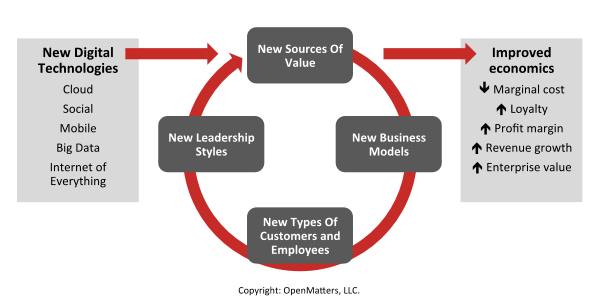
Figure 1: Disruption caused by new technology
In our business model research, based on financial data from the S&P 500 companies, we found that Network Orchestrators — companies that invest in intangible assets, like relationships with customers and suppliers (Facebook, LinkedIn, Airbnb, TripAdvisor) have the highest Multipliers (price to revenue ratios) at an average of 8x (more details here). These value premiums result from rapid growth and low scaling cost, as noted by Jeremy Rifkin in The Zero Marginal Cost Society. Further, we identified that the different leadership styles complement some business models and detract from others because each business model leverages different types of assets, which perform best under different leadership styles.
Since most companies are actually a composite of different asset classes and business types — for example, Nike manufactures shoes (physical), but also develops some software (intellectual) and is developing a network with Nike+ (network) — most leaders use several of the four leadership styles:
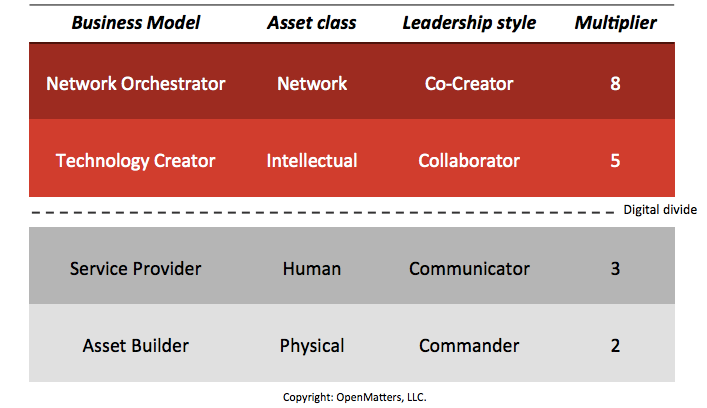
Figure 2: Relationship Between Business Model, Leadership Style and Value
The Commander sets the goal and tells others how to accomplish it. This works well with machinery, which happily does what it is told, and with direct subordinates who prefer to simply execute. It is less effective with employees and customers who want choice and participation. The result in today’s world is high marginal costs and little participation and buy-in. This style is most suited to the production of manufactured, commoditized goods as it is limited by the Commander’s vision and bandwidth.
The Communicator also sets a vision and a plan, but communicates it in order to inspire and create buy-in. This works better with employees and customers who want to at least understand where “the firm is headed.” It enables them to take action in line with the leader’s vision (it scales effectively), but it does not encourage innovation. This style is suited to services firms where all employees must work to fulfill the mission.
“Leaders need a broader range of style options to match the broader range of assets companies are creating today.”
The Collaborator works hand-in-hand with customers and employees (be they full time, part time or independent) to achieve the organization’s goals. As a result, it is empowering and enabling. This style taps into the innovation of people and drives the creation of new intellectual capital. Great examples are open innovators such as Victors and Spoils, a collaborative ad agency and Merck with its crowd-sourcing competitions.
The Co-Creator allows other stakeholders to pursue their individual goals in parallel with the goals of the organization. As a result, he or she drives both rapid scaling (due to the high level of participation) and innovation. This style is at the heart of network companies where value is shared by the company and the network participants, such as Airbnb, Uber and Innocentive.com.
Monday, 9 March 2015
The Innovative Organisation: Learning From Design Firms
The world’s top design firms have innovation down to almost a science. For traditional incumbents looking to build innovative capabilities, design can be the ideal catalyst.
In 1993, Samsung Electronics chairman Lee Kun Hee made a humbling discovery in a Los Angeles electronics shop. He found his company’s televisions relegated to a low, forgotten shelf in the back, while Sony and Panasonic models occupied the front window. To Lee, this spoke very badly for Samsung’s global standing. Soon afterwards, he began a radical overhaul of the company’s highly Confucian culture, with the goal of making Samsung one of the world’s leading brands.
Lee ordered top management to refocus their efforts from cost-saving to creating unique, must-have products. In 1994, Samsung initiated collaboration with a few design firms including IDEO. The following year, Samsung established an in-house design school (in partnership with the Art Center College of Design, the leading design school based in Pasadena, California) whose curriculum included art and culture tours of New York, Paris, Delhi, and many other creative hotspots. Perhaps most notably, Samsung was one of the few major companies in consumer electronics to create a position for a chief design officer. As times and technologies have changed, Samsung has gone from strength to strength: In the first quarter of 2014, the company shipped 85 million smartphones worldwide, more than its four leading rivals combined.
Design: Catalyst of Change
Design was pivotal to Samsung’s turnaround, in more ways than were readily apparent to consumers. As its products acquired sleekness and elegance, Samsung was retooling its organisational culture behind the scenes in line with Chairman Lee’s edict: "An enterprise's most vital assets lie in its design and other creative capabilities.” In short, the company was teaching itself to be innovative, before that buzzword achieved techie ubiquity.
The story at Apple, Samsung’s greatest competitor nowadays, shares certain similarities with Samsung’s. In the late 80s, prior to establishing its industrial group led by Bob Brunner (the design mastermind behind Beats headphones), Apple used to have only a few designers who would do most of their design work through design firms such as IDEO. Brunner eventually hired Jony Ive, with whom Steve Jobs led the design revolution initiated with the first iMac.
Samsung and Apple traced out a path to 21st-century success admired and followed by other brands. But too many companies still stash their design in a silo, where it can have little to no overall organisational influence.
A silo approach fails to capitalise on everything designers bring to the table in addition to creativity. Top design firms such as IDEO, Continuum, and Eight, Inc. have not only a well-tooled process for converting innovation opportunities into real innovations, but also a set of organisational elements perfectly aligned with that process. If companies require an innovation role model, they need look no further than design firms.
The Three “I”s in Design Firms
Designers’ most valuable capabilities have nothing to do with Photoshop, or any tool or technique for “designing”. They are much more about setting a direction than executing directives, more about shaping creativity to practical needs than indulging flights of fancy. By observing how many design firms work, I have identified three core organisational capabilities at which they particularly excel, which also comprise the rudiments of any innovation journey: user-centric insighting, deep and diverse ideating, and rapid and cheap iterating.
User-centric insighting: In order to create value in novel ways (the goal of innovating), you must first locate opportunities to do so. Where to start looking is easy to see—with the end-user—but it’s far more difficult to detect and synthesise actionable information within the complexity of the user experience. Customer surveys and focus groups simplify the process, but are often removed from how people authentically respond in the marketplace. Designers, by contrast, prefer observation to interrogation, developing empathy to discern unarticulated, even unconscious, user needs. As Tim Kobe, CEO of design firm Eight, Inc. put it, “We represent the end-user in all the design decisions that take place in these innovation projects.” And that’s why building empathy with the target user is crucial, as Continuum did when working with Procter & Gamble to reinvigorate the Pampers brand. Observing mums and their babies, designers realised that the mothers’ ultimate concern was their infant’s development, not the diaper itself. With that in mind, they devised a line of premium diapers for different developmental stages (Swaddlers, Cruisers, etc.) rather than segmenting by age.
Deep and diverse ideating: Designers generate heaps of new ideas based on user insights. This phase is where they unleash their creativity, coming up with as many and as distinct potential solutions as possible before putting much thought into implementation. These preliminary solutions are the product of an organisational process that deliberately cultivates a broad range of perspectives. Far from avoiding eccentric and exceptional voices, design firms seek them out and encourage their contributions within an atmosphere of freedom of thought and playfulness. Playfulness is so important at IDEO that they have created a Toy Lab where designers conceive and test out some of their creations by playing with kids as young as 18 months.
Rapid and cheap iterating: Designers understand that the creative flurry of the ideation phase can take them only so far. They are quick to make ideas concrete and not shy to declare them failures when they don’t live up to expectations. For designers, failures are not negative events but learning experiences. Producing fast and cheap dummy versions to test out concepts means that even when the experiments flop, it’s still a win-win. Singapore-based multidisciplinary design consultancy Awaken Group makes “low-resolution prototypes” of spaces using stacked cardboard boxes to represent walls. That way, alterations can be made to the design in a matter of moments as the client walks through the demo space.
Many firms developing new products or services carry out insighting, ideating, and iterating, so what sets design firms apart? It’s the way they approach these three distinct phases: Aligning their process and organisational elements to encourage user-centricity when insighting, fostering the generation of many and distinct ideas during ideating, and celebrating the creation of rapid and cheap prototypes during iterating. The challenge for established organisations then is to coordinate every aspect of their business so that they can produce their own versions of insighting, ideating, and iterating in a way that does not disrupt their capability to operate efficiently.
If a second-tier Korean TV manufacturer could reinvent itself to become the world’s biggest consumer electronics company, the transformative potential of design is limitless.
Sunday, 8 March 2015
14 Questions Every Christian Leader Should Ask Themselves

The story of William Wilberforce fascinates me. Born in 1759, Wilberforce became the youngest member of the House of Commons at just 21. Thanks to the influence of his mentor John Newton, the former slave ship captain and hymn writer of Amazing Grace, Wilberforce’s life changed radically. He became a born-again, devout Christian. Inspired by the Scripture’s teaching on the foundational equality of human beings, he spent his entire life leading the anti-slavery movement in the British Empire.
Behind the remarkable legacy of this leader, I discovered the greatest secret to his personal life:
His commitment to weekly withdrawals form the wild scramble of public life so that he could engage in worship, connection with a small circle of close friends, and quiet reflection.
Today, we live in a world blinded by the intoxication of consumerism. Every day, we are inundated with a litany of to-do lists. There’s simply too much “pursuits” on our plate (albeit all for the “glory” of God).
Gordon McDonald challenges leaders to ask the following questions to engage our inner conversation.
1) What have been the beautiful moments in which God may have been revealing himself to me? And what have been the evil moments when the worst in me or in the larger world showed itself?
2) What happened this week that needs to be remembered, perhaps recorded in a journal so I can return to it in the future and recall the blessing (or the rebuke) of God? Making such a record is like those monuments and altars God had the Israelites raise up when great things worth remembering had happened.
3) What have my prevailing feelings been (and what are they at the present)? Has there been a preponderance of sadness, of fear, of anger, of emptiness? Or has it been a time where joy and enthusiasm has been the dominant mood
4) What have been the “blessings,” those acts of grace that have come through others or—as I perceive it—directly from God himself? Can I express praise and appreciation (sometimes even written in a thank-you note or journal)?
5) Have things happened for which I need to accept responsibility, perhaps leading to repentance? Why did they happen? Were they avoidable and how can they be prevented in the future?
6) What have been the thoughts that have been dominating my leader think-time? Noble thoughts? Escapist thoughts that woo me away from more important or challenging issues? Superficial thoughts that lead to nowhere?
7) Is there a possibility that I am living in denial of certain realities? Painful criticism, sloppy work, habitual patterns that are hurting me and others?
8) Are there any resentments or ill feelings toward others that remain unaddressed, unforgiven?
9) As a leader visualizing myself in the company of spouse, children, friends, colleagues: am I a pleasant person to be around? Are people challenged, elevated, enthused when I enter the room? As someone has observed, “Some people bring joy wherever they go; others bring joy when they go.” Which am I?
10) What is God trying to say into my life today? Through Scripture? Through other readings? What has he been saying through those in my inner circle of relationships? Through critics? What insights swirl up and out of the deepest parts of my soul? Which of them needs to be repudiated, and which needs to be cultivated?
11) What are the possibilities in the hours ahead? Where might there be ambushes that would challenge character, reputation, well-being?
12) What are the things I might do and say that would make the people in my inner circle feel more loved and appreciated?
13) Am I mindful of the socially awkward, the poor, the suffering, the oppressed in my local world and in the larger world? Am I in tune with appropriate current events in the world and perceiving them through the lens of biblical perspective?
14) What specific steps will I take today to enhance growth as a follower of Jesus?
Read more; http://ht.ly/IHd6y
Subscribe to:
Posts (Atom)